Custom software for work that does not end at a desk.
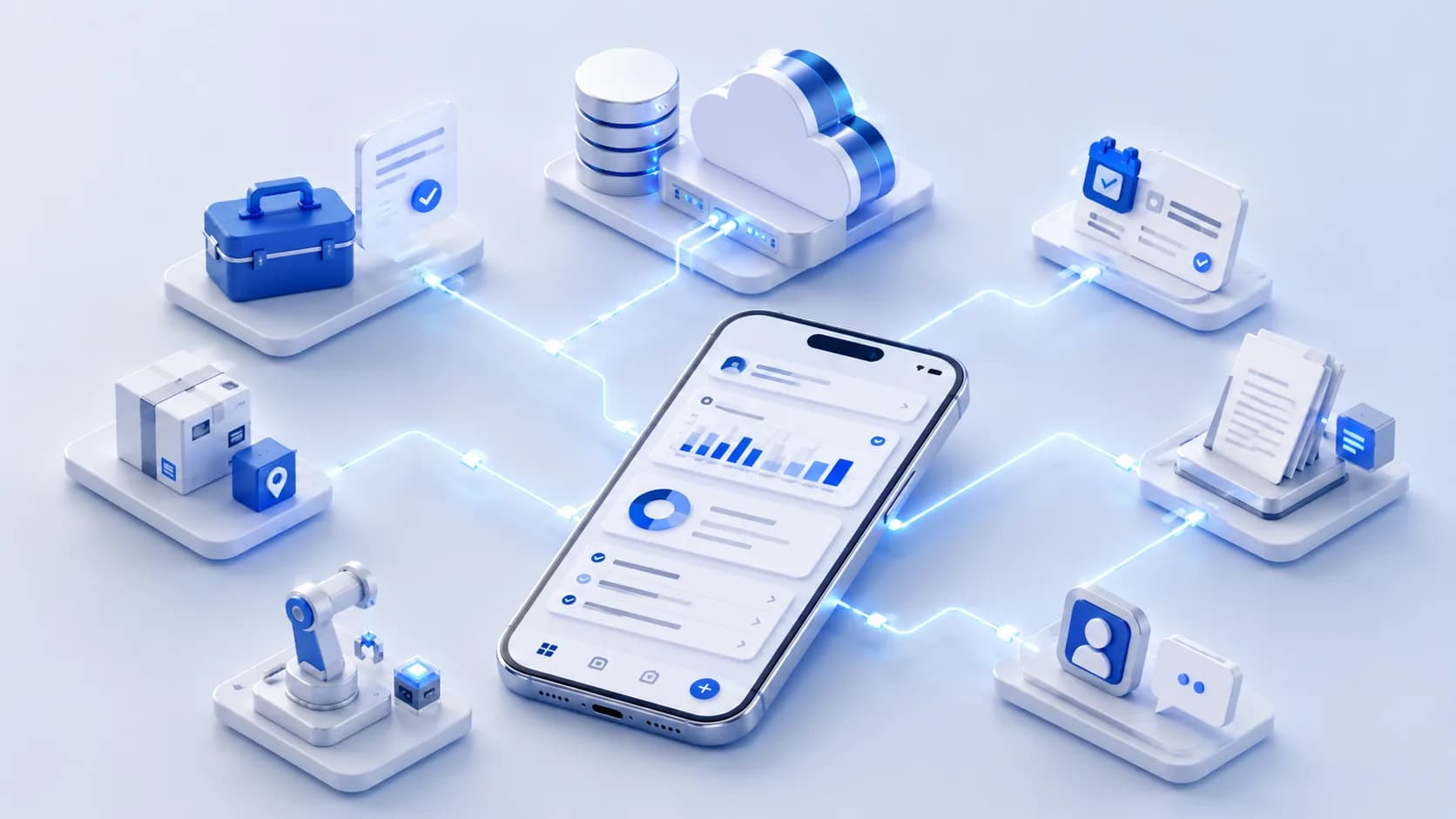
Field service, production, support and logistics need information where the work actually happens. Mobile applications connect employees and customers directly to your central business systems.
A mobile application is software for phones and tablets, built for work that does not happen at a desk. For company use the deciding factors are that it works offline and that capturing data is faster than a paper note, because otherwise it will not be used.
 AI-generated
The work happens on site. The software sits in the office.
Orders are printed out, notes are taken on paper, photos are sent via messenger — and entered into the system in the office at night. Not because employees are careless, but because the right tool for the road is missing.
The detour via the desk.
When data is only transferred later in the office, delays and transcription errors follow. The back office works with outdated states, follow-up questions pile up, and documentation stays incomplete — every case runs twice: once in the field, once at the desk.
Connect employees and customers directly to your systems.
Custom mobile apps make orders, checklists, documents and status reports available on the phone or tablet — captured once, right on site, including photos, signatures and timestamps.
Typical use cases.
Capture information where it originates.
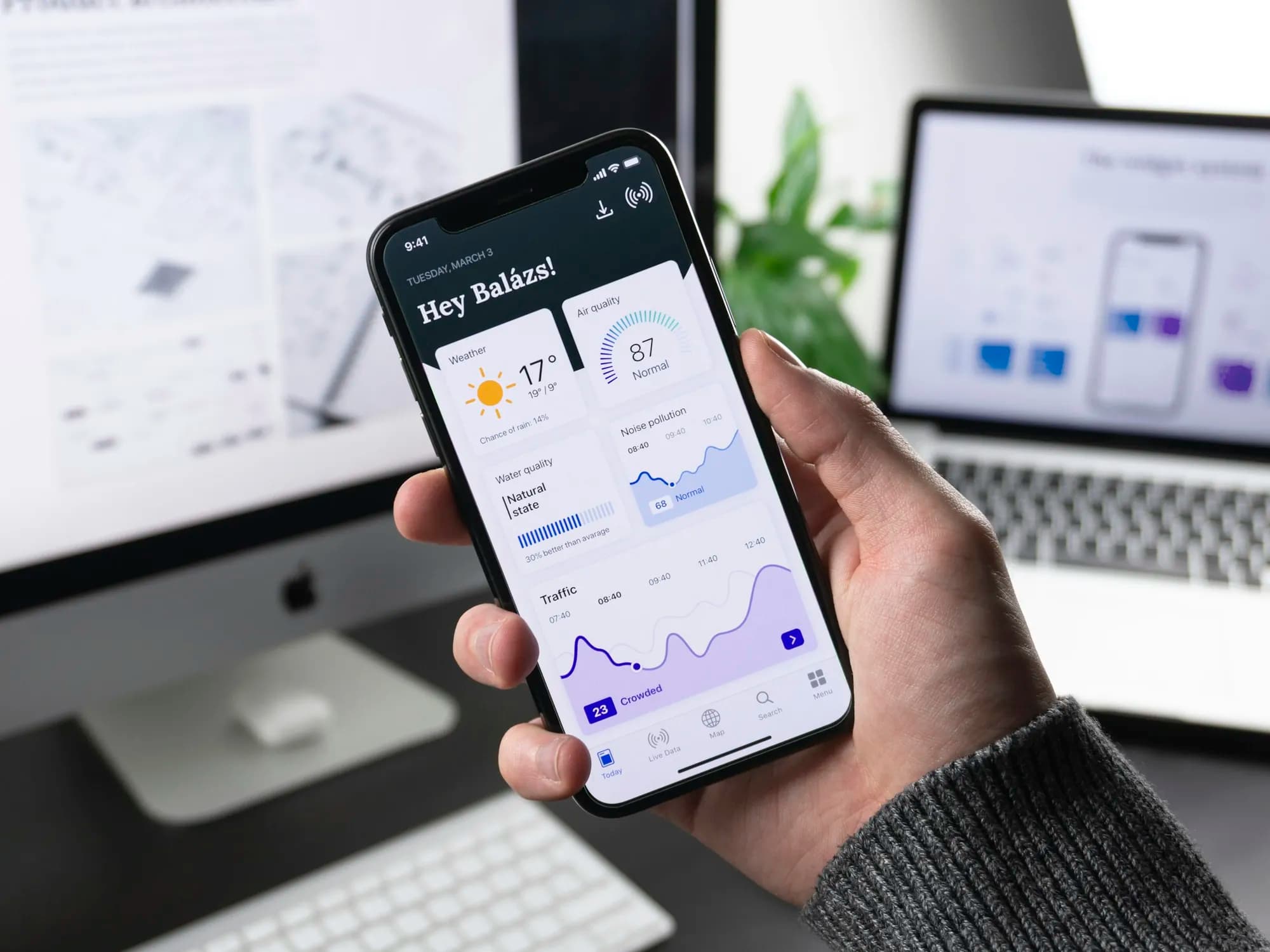
What is captured on site is in the system immediately: complete, current and without the detour via paper and re-entry. The back office sees the state in real time, and documentation happens as a by-product.
- No duplicate capture
- Current status in real time
- Complete documentation
- Fewer questions between field and office
- Works offline where needed
- Less paper
 Unsplash
Connected to your existing infrastructure.
The app is not a data silo — it is the mobile access point to your systems: it talks to your business software through an API, and through that to ERP, CRM or database. What is captured on the road lands in the leading system without any intermediate step.
From daily work to the app.
We look at how the work on site actually happens — and design the app around it: few steps, clear screens, robust with gloves, bad light or no signal. Development is iterative, tested with real users, and distributed through the channel that fits you: app stores or internal distribution.
Technology.
Depending on the requirements we build with Flutter, React Native or native technologies such as Swift. For most business apps one shared codebase for iOS and Android is enough — we go native where special hardware or platform features demand it.
Related building blocks
Mobile apps deliver their value together with integrations to your systems — and often with a custom web application as the hub for the back office.
Frequently asked questions
Native app or cross-platform?
For most business apps a shared codebase with Flutter or React Native is the most economical choice: one development, both platforms. We build natively (e.g. Swift) when special hardware or platform features require it.
Does the app work without an internet connection?
Yes, when the use case requires it. Data is captured locally and synchronised as soon as a connection is back — important for halls, basements or regions with poor coverage.
Does the app have to go into the app stores?
Not necessarily. Internal apps can reach your employees' devices directly via mobile device management or enterprise distribution. Customer portals and public apps are published in the stores as usual.
Can the app be connected to our ERP or CRM?
Yes — that is the normal case. The app communicates with your central systems through an API, so data captured on site lands in the leading system without any intermediate step.
Do we need two apps for iOS and Android?
No. With Flutter or React Native one codebase runs on both platforms — features, fixes and further development benefit both at the same time.
Your process does not fit standard software?
Then we should not force it into one. Show us how your business works today and where the process starts to break down.